The Trump administration’s newly released National Security Strategy (NSS) marks a noticeable shift in how the United States views its relationship with China. Unlike previous reports, this version places a clear emphasis on economic competition while downplaying ideological or human rights concerns.
From Confrontation to Commerce
Past strategies described China as “America’s most consequential geopolitical challenge” or a revisionist power threatening U.S. influence. The latest NSS, however, focuses on trade, investment, and economic leverage, signaling a move away from confrontational language. David Sacks, an Asia studies fellow at the Council on Foreign Relations, noted that “China is now primarily framed as an economic competitor, not a strategic adversary.” Wen Ti-Sung, an Atlantic Council fellow, described the approach as “a rebalancing of interests and values,” prioritizing U.S. economic growth and domestic development over global ideological leadership.
China’s Cautious Response
China’s response to the new NSS has been cautiously positive. At a press briefing, Foreign Ministry spokesperson Guo Jiakun highlighted “mutual respect, peaceful coexistence, and win-win cooperation” as guiding principles. Beijing reaffirmed its stance on Taiwan but otherwise offered a neutral reaction, signaling approval of the softer tone ahead of Trump’s scheduled summit with President Xi Jinping next spring.
Economic Competition Takes Center Stage
Despite the milder language, analysts caution that the NSS still frames China as a key competitor. State-run media in Beijing stressed that the United States continues to seek strategic advantage, particularly in economic matters. The NSS itself labels economics as “the ultimate stakes,” with a focus on restoring U.S. trade balance, promoting reciprocity, and ensuring American economic independence.
Reduced Attention to Other Geopolitical Flashpoints
One notable change is the reduced attention to geopolitical flashpoints outside trade. North Korea, Myanmar, and other regions receive little to no mention, contrasting with the Biden administration’s 2022 strategy.
Taiwan Emerges as a Strategic Priority
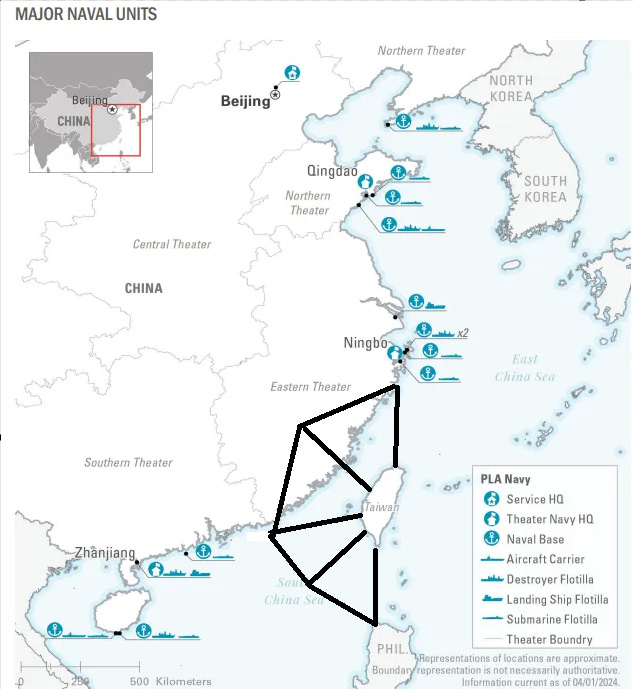
Taiwan, however, features prominently. The NSS emphasizes the island’s critical role in semiconductor production and its strategic location in the South China Sea. The strategy calls for deterrence, stronger defense spending, and maintaining military overmatch to secure global trade routes, while using more cautious language on the island’s political status.
Balancing Deterrence and Diplomacy
This dual approach—asserting military readiness while softening political rhetoric—sends mixed signals to Beijing but reassures allies about U.S. commitment to regional stability. Analysts suggest that Taiwan is now a higher priority in the Trump administration’s agenda due to both economic and strategic considerations.
A New U.S.-China Framework
Overall, the 2025 NSS represents a major pivot in U.S. policy toward China: from ideological confrontation to economic strategy. By emphasizing trade, investment, and economic leverage, the strategy aims to protect U.S. interests while maintaining flexibility in diplomacy, particularly ahead of high-level talks with Beijing
About The Author