
For an industry that spent years warning of existential threats, crypto has had a relatively calm year. There were no spectacular collapses, no catastrophic frauds, no sudden domino effects. And yet, 2025 is shaping up to be one of crypto’s most discouraging periods in recent memory.
From Record Highs to a Reality Check
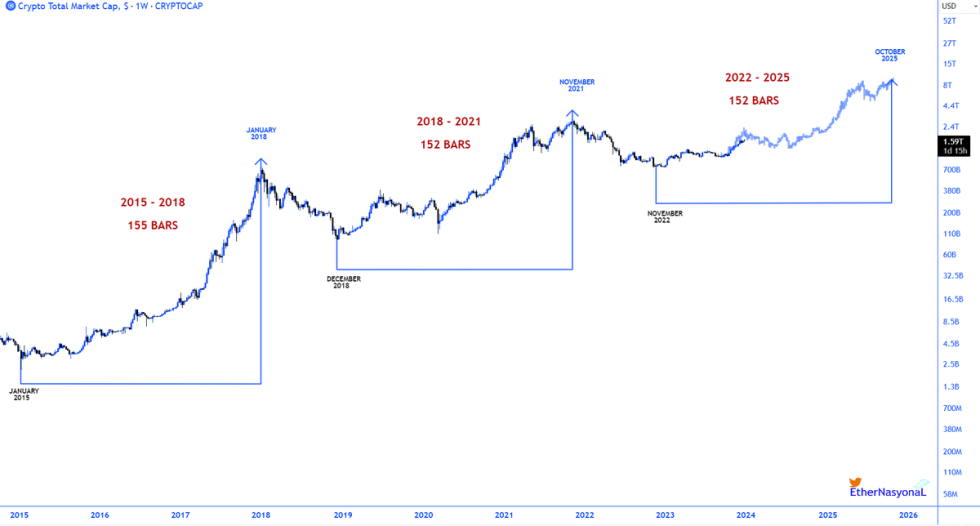
For months, Bitcoin appeared unstoppable. By October, it had climbed to roughly $126,000, fueled by optimism, institutional money, and a political climate unusually friendly to digital assets. That rally didn’t hold. Prices retreated sharply, wiping out gains and leaving Bitcoin in the red for the year — a disappointing performance compared with traditional markets like the S&P 500, which continues to post solid returns.
No Villains Left to Blame
What makes the downturn notable is the absence of obvious external enemies. Crypto advocates have long pointed to regulators, hostile politicians, or skeptical banks as barriers to growth. Today, those obstacles are largely gone. Washington is signaling support. Congress is advancing legislation aligned with industry priorities. Institutional investors have poured billions into regulated products, including Bitcoin exchange-traded funds.
When Support Isn’t Enough
Yet enthusiasm is fading. After stabilizing near $90,000, Bitcoin slipped again, reinforcing the sense that the market has lost its footing. While leveraged speculation and forced liquidations helped accelerate the decline, those mechanics don’t fully explain the prolonged weakness.
Risk Is Alive — Just Not Here
Risk appetite elsewhere remains strong. The tech-heavy Nasdaq has surged ahead, showing that investors are still willing to embrace volatility. Crypto’s problem, then, may not be financial — it may be reputational.
A Culture That Won’t Grow Up
Despite its growing institutional presence, crypto culture continues to struggle with credibility. Scams, online harassment, and headline-grabbing stunts remain stubbornly tied to the industry’s public image. For potential investors watching from the sidelines, the message is confusing: an asset class asking to be taken seriously while failing to distance itself from its most reckless actors.
The Human Cost of Digital Assets
This year alone, crypto-related ATM scams have drained hundreds of millions of dollars from Americans. Industry data from Chainalysis also shows a troubling rise in violent crimes targeting crypto holders, including so-called “wrench attacks,” where victims are physically threatened to surrender wallet access. One such incident, involving the alleged captivity of a young investor in New York, briefly pushed these risks into the national spotlight.
Confidence, Not Code, Is the Issue
None of this invalidates crypto as an investment. But it does raise questions about trust — especially for retail investors who entered the market near recent highs and are now facing steep losses.
Investors Caught in the Middle
Economist Eswar Prasad of Cornell University describes today’s investors as caught between ambition and anxiety. The fear of missing out competes with unease about the industry’s unresolved problems, amplifying volatility in both directions.
A Rally Without Loyalty
Bitcoin’s post-election rally, sparked by Donald Trump’s return to office, attracted a wave of newcomers more interested in momentum than ideology. But when prices softened, many of those investors had little reason to stay.
The Road Ahead
Crypto has achieved political acceptance and financial access — but not yet public confidence. Until the industry confronts its cultural and ethical blind spots, market recoveries may remain fragile, no matter how favorable the broader conditions appear.
About The Author