As the new year begins, it’s the perfect time to focus on habits that support long-term health. Small, consistent changes can make a huge difference. Here are 10 practical tips to help you lead a healthier, happier life in 2026.
1. Eat a Balanced Diet
A healthy diet is the foundation of good health. Include a variety of foods such as fruits, vegetables, legumes, nuts, and whole grains. Adults should aim for at least five portions (around 400g) of fruits and vegetables per day. Tips to increase intake: add vegetables to every meal, snack on fresh fruits, choose seasonal produce, and experiment with new healthy recipes. A balanced diet reduces the risk of malnutrition and chronic conditions like diabetes, heart disease, stroke, and cancer.
2. Reduce Salt and Sugar
Too much salt can raise blood pressure, while excess sugar increases the risk of tooth decay and unhealthy weight gain. Limit high-sodium condiments like soy sauce, fish sauce, and avoid overly salty snacks. For sugar, reduce candies, sugary drinks, and sweet treats. WHO recommends keeping free sugar intake below 5% of total energy for optimal health benefits.
3. Limit Harmful Fats
Fats are essential, but moderation is key. Keep total fat intake under 30% of daily energy. Prefer unsaturated fats (found in fish, avocado, nuts, and oils like olive or canola) and limit saturated fats (found in butter, fatty meat, cream, and cheese) and trans fats (common in baked and fried foods, pre-packaged snacks). Choosing the right fats helps maintain a healthy weight and reduces the risk of chronic diseases.
4. Don’t Smoke
Tobacco use is linked to lung disease, heart disease, stroke, and other serious health problems. Smoking also harms people nearby through second-hand exposure. If you smoke, quitting now brings immediate and long-term benefits. If you don’t smoke, stay tobacco-free and protect your right to clean air.
5. Stay Physically Active
Physical activity includes any movement that uses energy—exercise, chores, walking, cycling, or recreational activities. Adults aged 18–64 should aim for at least 150 minutes of moderate-intensity activity per week. Increasing this to 300 minutes provides extra health benefits, including stronger muscles, better heart health, and improved mental well-being.
6. Check Your Blood Pressure Regularly
High blood pressure, or hypertension, often has no obvious symptoms, earning it the nickname “silent killer.” Regular check-ups help detect problems early, reducing the risk of heart disease, stroke, and kidney issues. If your numbers are high, follow your healthcare provider’s guidance on lifestyle changes or treatment.
7. Follow Traffic Safety Rules
Road accidents claim millions of lives every year. Protect yourself and others by following safety rules: wear seatbelts, use child restraints, wear helmets when biking or motorcycling, avoid drinking and driving, and keep your phone away while driving. Simple precautions save lives and prevent injuries.
8. Take Antibiotics Only as Prescribed
Misusing antibiotics fuels antibiotic resistance, making infections harder to treat and increasing hospital stays and medical costs. Only take antibiotics when prescribed by a qualified professional, complete the full course, and never share medication with others. Responsible use keeps antibiotics effective for everyone.
9. Wash Your Hands Properly
Hand hygiene prevents the spread of germs and infections. Wash your hands with soap and water when dirty, or use an alcohol-based hand rub if hands are clean. Good hand hygiene is essential not just for healthcare workers, but for everyone to reduce illness and protect loved ones.
10. Have Regular Check-Ups
Regular health check-ups catch potential problems early, improving treatment outcomes and quality of life. Schedule screenings and preventive care at your local health facility. Early detection is key for conditions like high blood pressure, diabetes, or cancer. Taking time for regular check-ups is a small step that pays off in long-term health.
Just A Thought
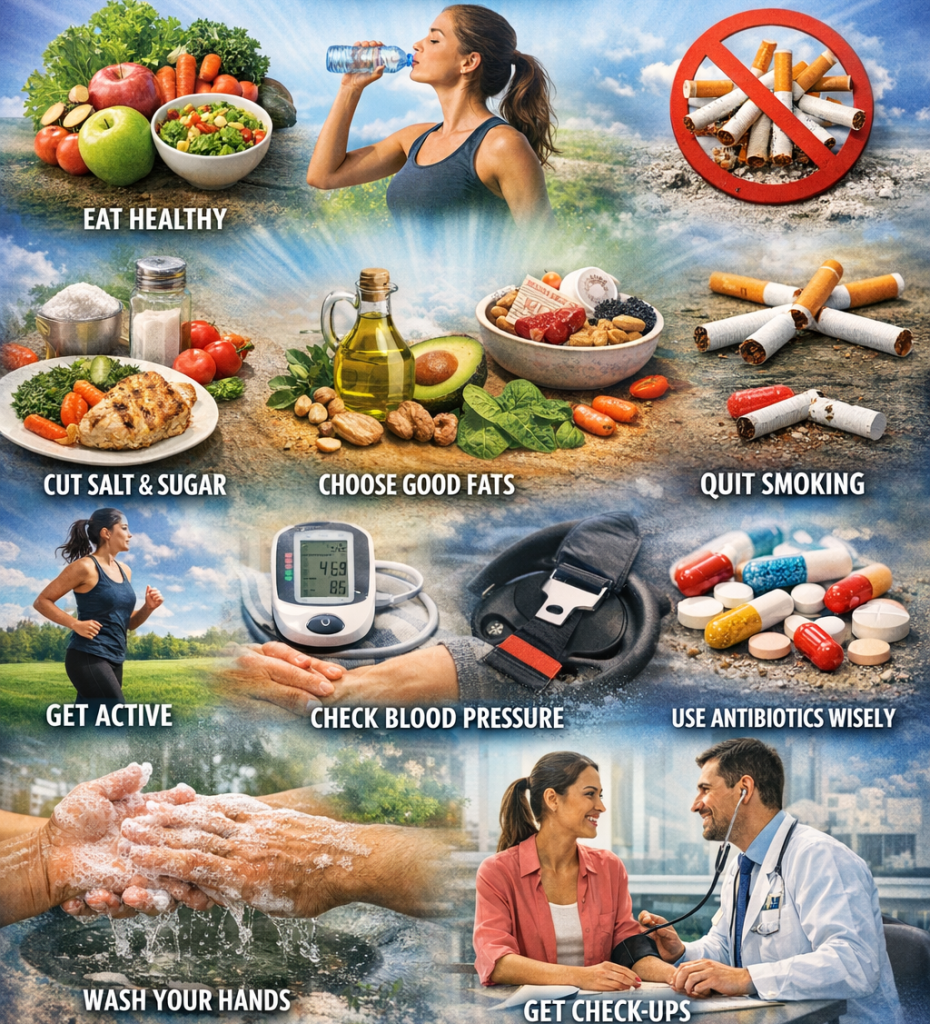
Leading a healthy lifestyle is about consistency, not perfection. Combining good nutrition, physical activity, proper hygiene, preventive care, and safe habits can drastically reduce your risk of disease and improve overall well-being. Start small, stay consistent, and make 2026 a year of positive health changes.
About The Author