Denmark’s prime minister has firmly rejected renewed claims by Donald Trump that the United States should take control of Greenland, warning that such rhetoric undermines international law and threatens transatlantic stability.
Prime Minister Mette Frederiksen said there is no legal, political, or moral basis for the U.S. to annex Greenland, an autonomous territory within the Kingdom of Denmark. Her remarks followed Trump’s statement that the U.S. “absolutely” needs Greenland for national security.
Rising Tensions After U.S. Action in Venezuela
The comments come at a volatile moment in global politics. The recent U.S. military operation in Venezuela, which led to the capture of President Nicolás Maduro, has heightened concerns among European allies about Washington’s willingness to use force to reshape geopolitical realities.
Those fears deepened after figures linked to Trump’s Maga movement began openly promoting the idea of Greenland becoming U.S. territory.
Social Media Provocation Sparks Outrage

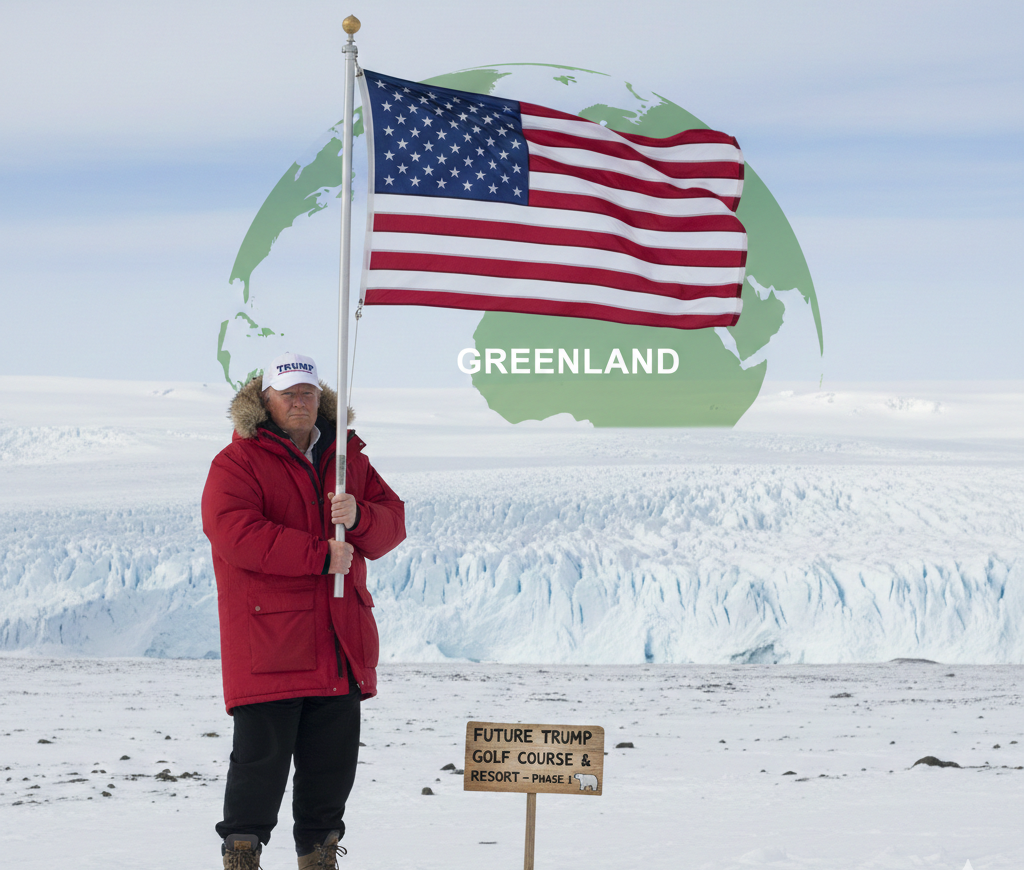
Tensions escalated further when a widely shared social media post showed a map of Greenland covered in the U.S. flag. The image triggered outrage in both Denmark and Greenland, where officials viewed it as a provocative and disrespectful gesture.
Greenland’s prime minister, Jens-Frederik Nielsen, condemned the post and warned against treating sovereignty as a spectacle. He urged calm while stressing that Greenland is not for sale and that its future will not be decided online.
Trump Doubles Down on Security Argument
Despite the backlash, Trump showed no sign of retreat. Speaking to reporters aboard Air Force One, he repeated his claim that Greenland is strategically vital to U.S. national security and suggested Denmark lacks the capacity to defend the territory effectively.
The Arctic island has gained importance as global powers compete for military positioning, influence, and access to valuable natural resources.
Denmark Emphasizes Alliance and Defense Spending
Denmark’s ambassador to the United States responded by highlighting the long-standing defense partnership between the two nations. He stressed that U.S., Danish, and Greenlandic security interests are closely aligned, particularly in the Arctic.
He also pointed to Denmark’s increased defense spending in 2025, noting that billions of dollars have been allocated to strengthen security in the Arctic and North Atlantic regions.
A Special Envoy and Growing Concerns
Adding to the unease, Trump recently appointed Louisiana Governor Jeff Landry as a special envoy to Greenland. Landry welcomed the role publicly and praised Trump’s hardline foreign policy, including the recent operation in Venezuela.
The move reinforced concerns among European allies that the administration’s interest in Greenland is more than symbolic.
Military Force Not Ruled Out
Trump has repeatedly refused to rule out the use of military force to gain control of Greenland. That position has unsettled NATO partners and drawn criticism across Europe.
Greenland, home to about 57,000 people, already hosts the United States’ northernmost military base, making it strategically significant even without a shift in sovereignty.
Sovereignty, Independence, and the Arctic Future
Last month, Denmark’s defense intelligence service took the unusual step of labeling the U.S. a potential security concern, marking a dramatic change in transatlantic relations.
While most Greenlanders support eventual independence from Denmark, polls show little interest in becoming part of the United States. Analysts warn that what was once dismissed as political posturing now carries serious diplomatic weight.
As competition in the Arctic intensifies, Trump’s renewed focus on Greenland has turned a long-dormant idea into a major geopolitical flashpoint — one that could reshape alliances and redefine power in the far north.
About The Author