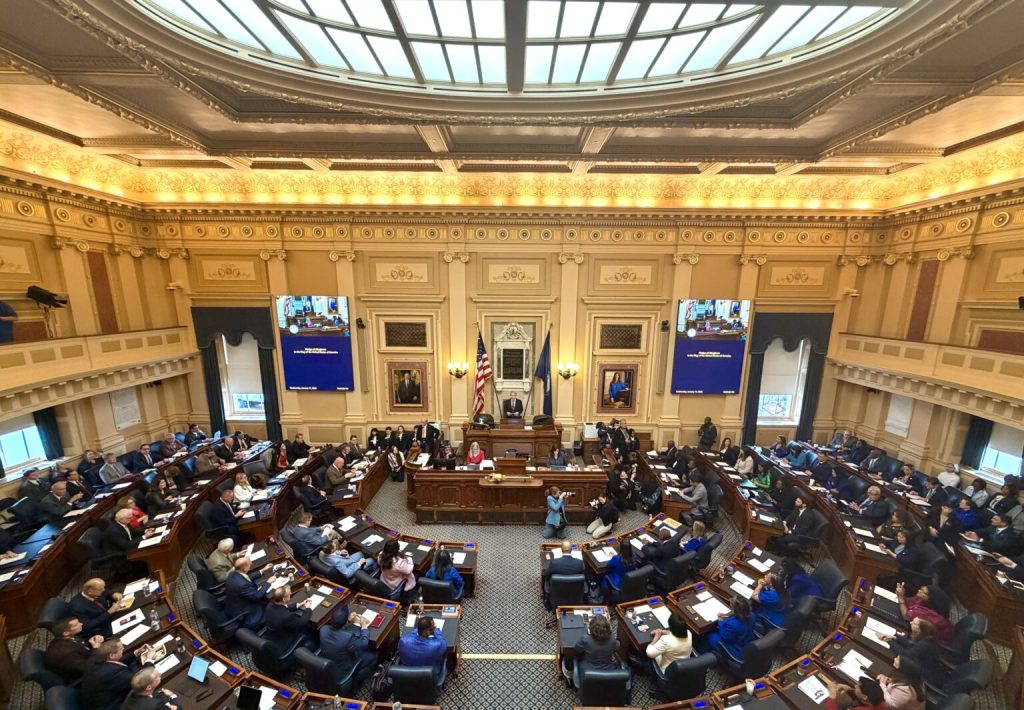
On Wednesday night, 46 House Republicans joined Democrats to block Rep. Chip Roy’s amendment. The measure aimed to cut funding for activist federal judges and the D.C. courts accused of repeatedly overstepping their authority.
The amendment was part of the fiscal 2026 appropriations package. It proposed reducing the District of Columbia District Court and Circuit Court budgets by 20%. In addition, it would eliminate staff funding for Judges James Boasberg and Deborah Boardman.
Roy’s Case Against Judicial Overreach
Rep. Roy argued that certain judges have placed personal and political preferences above the will of the American people. Moreover, he said these judges ignore the President’s policy agenda. He called this behavior a serious breach of judicial responsibility and ethics.
“This amendment addresses judicial abuse of power,” Roy stated. “The D.C. courts have repeatedly acted in ways that ignore both the law and the public’s mandate. We created these courts. Therefore, we can regulate their funding.”
He also emphasized that the funding cuts were necessary to hold Judges Boasberg and Boardman accountable for what he and his allies consider activist and partisan actions.
Controversial Decisions
Judge Boasberg has drawn criticism from conservatives for authorizing sealed subpoenas and nondisclosure orders in politically sensitive investigations. This includes special counsel Jack Smith’s Arctic Frost probe.
Meanwhile, Judge Boardman sparked outrage after giving a lenient sentence to a man who attempted to assassinate Supreme Court Justice Brett Kavanaugh. Despite these controversies, the amendment failed in a House vote. The results were 163 in favor, 257 against, with one present and 16 not voting.
The Republican Split
The most notable outcome was that 46 Republicans broke ranks. They sided with Democrats to defeat the measure. Critics argue this shows some party members are willing to protect the judiciary, even against proposals from their own side.
Some of the Republicans who voted against the amendment include:
Mark Alford (MO), Don Bacon (NE), Rob Bresnahan Jr. (PA), Vern Buchanan (FL), Ken Calvert (CA), John Carter (TX), Tom Cole (OK), Mario Díaz-Balart (FL), Chuck Edwards (NC), Jake Ellzey (TX), Brian Fitzpatrick (PA), Mike Flood (NE), Vince Fong (CA), Andrew Garbarino (NY), Carlos A. Giménez (FL), Mike Haridopolos (FL), Jeff Hurd (CO), Darrell Issa (CA), Dusty Johnson (SD), Dave Joyce (OH), Thomas H. Kean Jr. (NJ), Jen Kiggans (VA), Kevin Kiley (CA), Kimberlyn King-Hinds (MP), Darin LaHood (IL), Nick LaLota (NY), Mike Lawler (NY), Nicole Malliotakis (NY), Celeste Maloy (UT), Michael McCaul (TX), Tom McClintock (CA), John Moolenaar (MI), Blake Moore (UT), Dan Newhouse (WA), Jay Obernolte (CA), Mike Rogers (AL), Hal Rogers (KY), Maria Elvira Salazar (FL), Austin Scott (GA), Mike Simpson (ID), Adrian Smith (NE), Mike Turner (OH), David Valadao (CA), Bruce Westerman (AR), Rob Wittman (VA), Steve Womack (AR).
Why This Matters
This vote highlights the ongoing debate over judicial accountability. On one hand, elected officials want to curb what they see as judicial overreach. On the other hand, defenders argue that the independence of the courts is critical. Therefore, this clash underscores the tension between oversight and judicial freedom.
About The Author