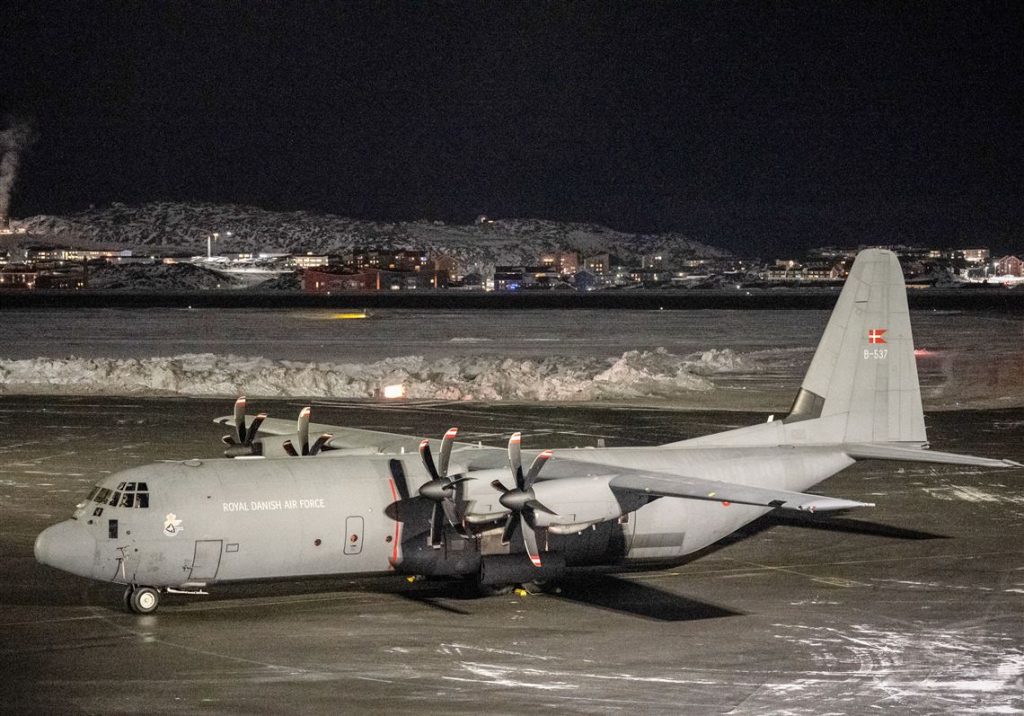
European military forces continued arriving in Greenland on Thursday, reinforcing Denmark’s position amid escalating tensions with the United States over the strategically vital Arctic territory.
The troop deployments coincided with high-level talks in Washington between officials from Denmark, Greenland, and the U.S., where Danish leaders confirmed a “fundamental disagreement” with President Donald Trump regarding Greenland’s future status.
Denmark Boosts Military Presence in Greenland
Copenhagen announced Wednesday that it would expand its military footprint in Greenland, citing rising geopolitical uncertainty in the Arctic. The decision came as foreign ministers from Denmark and Greenland traveled to Washington for meetings with senior U.S. officials.
Several European allies quickly followed Denmark’s move. France, Germany, the United Kingdom, Norway, Sweden, and the Netherlands either sent small military contingents or pledged to deploy troops in the coming days.
The coordinated effort is widely viewed as a symbolic show of European unity, signaling that NATO allies are capable of safeguarding Arctic security without a U.S. takeover of the island.
France and Germany Confirm Troop Deployments
French President Emmanuel Macron confirmed that French military units were already en route to Greenland. French authorities said around 15 mountain infantry soldiers had arrived in Nuuk to participate in exercises.
Germany’s Defense Ministry also announced the deployment of a 13-member reconnaissance team, which arrived Thursday.
NATO Allies to Rotate Forces in Greenland
Danish Defense Minister Troels Lund Poulsen said Denmark aims to establish a more permanent military presence on the island, supported by rotating forces from NATO allies.
Speaking to Danish broadcaster DR, Poulsen said allied troops would operate in Greenland on a rotation basis, strengthening long-term defense capabilities in the Arctic region.
Denmark Says Disagreements With Trump Remain
Danish Foreign Minister Lars Løkke Rasmussen, standing alongside Greenland’s Foreign Minister Vivian Motzfeldt, said talks at the White House confirmed ongoing disagreements with President Trump.
Rasmussen said Trump continues to express interest in acquiring Greenland, but Denmark remains committed to diplomatic engagement with Washington.
“We will continue dialogue at the highest level,” Rasmussen said, while emphasizing Denmark’s clear limits.
Greenland Leaders Reject U.S. Ownership
Greenlandic leaders were unequivocal following the talks.
Prime Minister Jens-Frederik Nielsen reiterated that Greenland’s position has not changed.
“Greenland is not for sale,” Nielsen said. “Greenland does not want to be owned by the United States. Greenland does not want to be governed from the United States. Greenland does not want to be part of the United States.”
Public Reaction in Greenland and Denmark
In Nuuk, residents expressed mixed emotions, welcoming diplomacy but questioning the long-term implications. Several locals said the increased European military presence offered reassurance against possible U.S. pressure.
Maya Martinsen, 21, said it was comforting to see Nordic and European countries sending reinforcements. She added that the dispute appears driven more by Greenland’s untapped natural resources, including oil and critical minerals, than by national security.
Arctic Security Concerns Drive Military Buildup
Poulsen said Denmark’s expanded military activity reflects an unpredictable global security environment.
“This means an increased presence of aircraft, ships, and soldiers in and around Greenland,” he said, noting close cooperation with NATO allies.
NATO declined to comment on coordination details, referring questions to Danish authorities, but confirmed it is reviewing options to strengthen Arctic security.
Russia Criticizes Western Military Moves
Russia responded sharply, with its embassy in Brussels condemning what it described as Western militarization based on fabricated threats.
The embassy accused NATO of pursuing an anti-Russian and anti-Chinese agenda, while reiterating Moscow’s stance that the Arctic should remain a region of cooperation and peace.
Denmark and U.S. Form Working Group
Despite tensions, Rasmussen announced the creation of a joint working group with U.S. officials to address disagreements.
The group will focus on American security concerns while respecting what Rasmussen described as Denmark’s “red lines.”
Cautious Optimism After Washington Talks
Poulsen called the working group a positive step but warned that risks remain. Danish Prime Minister Mette Frederiksen echoed that assessment, saying the U.S. ambition toward Greenland remains unchanged.
Greenlandic lawmaker Juno Berthelsen said the most important outcome was Greenland’s direct participation in White House discussions. He suggested future cooperation could include U.S. support for a Greenlandic coast guard, creating local jobs and improving Arctic patrols.
In Copenhagen, resident Line McGee, 38, said diplomatic progress offered limited reassurance. “I don’t think the threat has gone away,” she said, “but I feel slightly better than I did yesterday.”
President Trump, speaking from the Oval Office, said, “We’ll see how it all works out. I think something will work out.”
About The Author