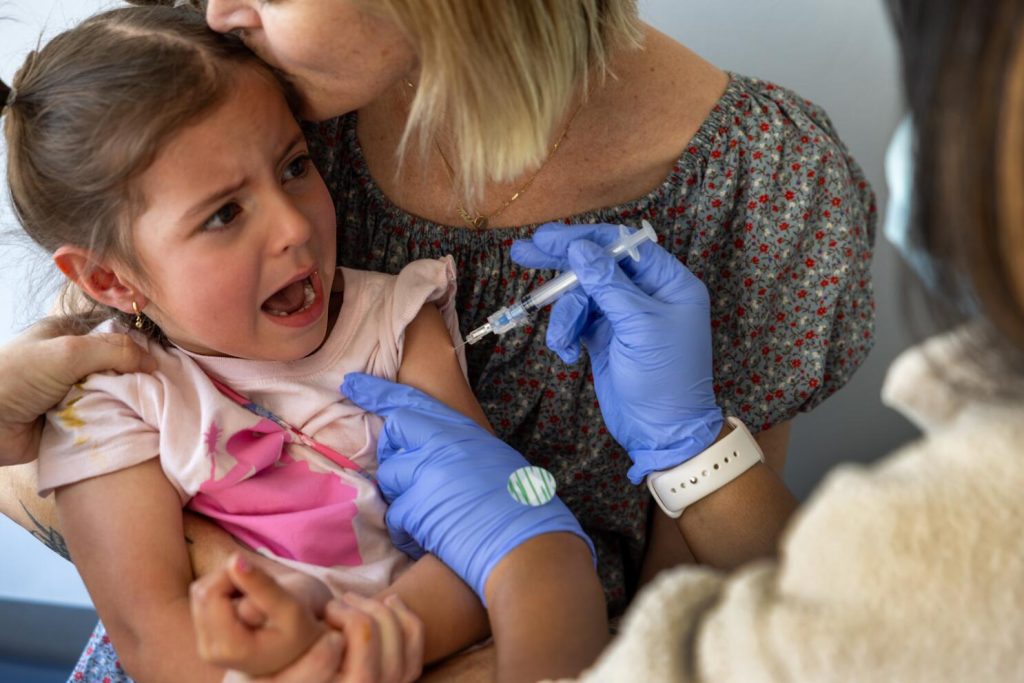
Pediatricians across the United States are raising concerns after federal vaccine recommendations changed, warning that the new guidance is confusing parents, weakening trust in vaccines, and potentially putting children’s health at risk. Doctors say the timing is especially troubling, as childhood vaccination rates are already declining and preventable diseases are beginning to resurface.
Vaccine Skepticism Is Already Growing
Dr. Molly O’Shea, a pediatrician in Michigan, says she has seen vaccine skepticism increase in both of her clinics. In more progressive communities, parents increasingly choose alternative vaccination schedules, while in conservative areas some families have stopped vaccinating their children entirely. As a result, O’Shea worries the new guidance will intensify confusion and further erode trust.
What the New Recommendations Changed
Most notably, federal health officials removed universal recommendations for several routine childhood vaccines. Instead, vaccines for hepatitis A, hepatitis B, rotavirus, RSV, influenza, and meningococcal disease now apply only to high-risk children or require “shared clinical decision-making” between parents and health care providers. According to doctors, this shift suggests these vaccines are optional rather than essential, despite decades of evidence proving their safety and effectiveness.
Doctors Push Back as Officials Defend the Move
Health Secretary Robert F. Kennedy Jr. says the changes promote transparency and informed consent while aligning U.S. policy with other countries. However, pediatricians strongly disagree, arguing the new language creates doubt at a time when measles and whooping cough cases are rising. They warn that weakening confidence in vaccines could reverse decades of public health progress.
Medical Groups Call for Congressional Review
In response, the American Academy of Pediatrics, along with more than 200 medical, public health, and patient advocacy organizations, urged Congress to investigate the decision. The groups questioned why established scientific evidence was ignored and why the advisory committee responsible for immunization guidance did not publicly discuss the changes before implementation.
Confusion Around ‘Shared Clinical Decision-Making’
At the center of the controversy is the term “shared clinical decision-making.” While doctors regularly discuss vaccines with parents, this framework means a vaccine is not routinely recommended and is instead treated as optional. Surveys show many Americans do not fully understand this distinction, and many parents are unaware that pharmacists count as health care providers, even though they frequently administer vaccines.
Access to Vaccines Could Become Harder
Doctors also worry the new guidance could make vaccines less accessible. Parents may no longer schedule quick vaccine-only visits or attend large flu clinics without first meeting with a medical provider, creating additional barriers that could lead to missed or delayed vaccinations.
Parents and Pediatricians Stay the Course
Despite the changes, many pediatricians say they will continue following long-standing medical recommendations. Parents like Megan Landry, whose young son is a patient of O’Shea’s, say their confidence remains unchanged, emphasizing that vaccines are safe, effective, and supported by decades of research while also protecting the wider community.
A Growing Fear of Moving Backward
Ultimately, doctors warn that eroding trust in science and medicine could undo years of progress. With hospitalizations from preventable diseases already increasing, many fear the latest federal move could push the country backward instead of forward in protecting children’s health.
About The Author