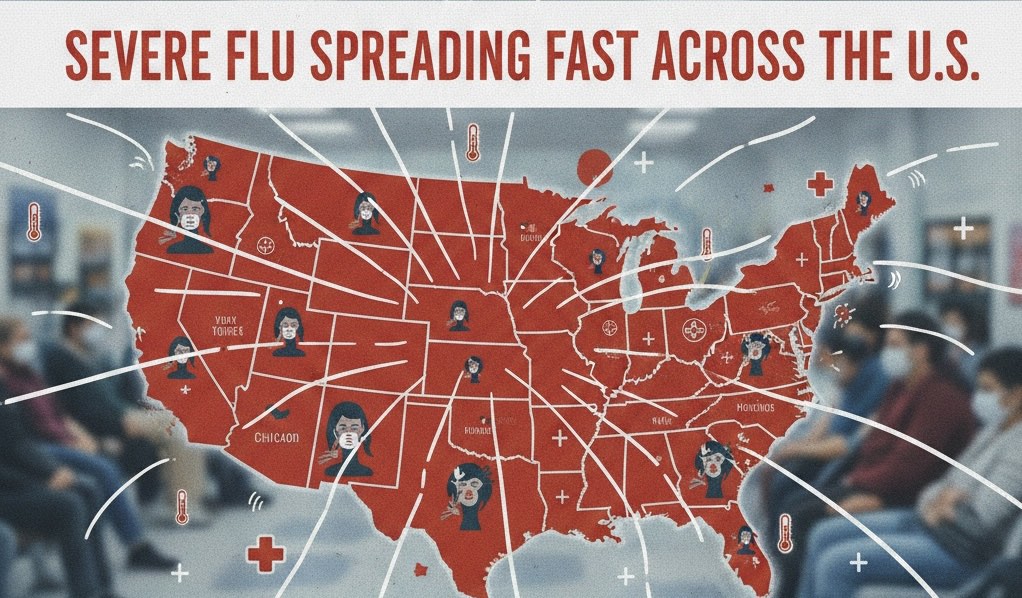
As winter advances, medical professionals are cautioning that this year’s flu season could be more severe than what many Americans have experienced in recent years.
Health systems are already seeing rising case numbers, and experts say a newly dominant strain may be responsible.
According to reporting cited by Fox News, a specific version of Influenza A—identified as H3N2, subclade K—is contributing to increased infections across the United States and abroad.
Public health specialists describe the strain as particularly challenging due to how quickly it spreads and because current flu vaccines were not designed to closely target it.
While flu symptoms remain largely familiar—including fever, body aches, fatigue, cough, and sore throat—clinicians say many patients are reporting stronger and more persistent illness than usual this season.
Early Warnings From Medical Experts
Before widespread media attention focused on the strain, Dr. Peter McCullough of The Wellness Company had already been raising concerns. In earlier appearances on Real America’s Voice, he warned that the winter months could bring overlapping waves of respiratory illnesses, including influenza, RSV, and COVID-19.
Dr. McCullough has also expressed concerns about reduced vaccine effectiveness against this particular H3N2 variant, noting that flu viruses evolve rapidly and protection levels can change from year to year.
Step One: Strengthening Preventive Measures
Health experts continue to emphasize prevention as the first line of defense, especially during high-risk situations such as air travel, holiday gatherings, and time spent in crowded indoor spaces.
Supporting the body’s natural defenses—particularly in the nose and throat, where respiratory viruses commonly enter—has become a focus for many during peak flu season.
Preventive routines are especially encouraged for those who frequently travel, commute on public transportation, exercise in shared facilities, or attend large family events.
Step Two: Acting Quickly at the First Sign of Illness
Even with preventive efforts, infections can still occur. Medical professionals stress that early treatment can make a meaningful difference in recovery time and symptom severity.
Some families choose to prepare in advance so care can begin as soon as symptoms appear. In certain cases, physicians may prescribe antiviral medications such as Tamiflu when appropriate, allowing treatment to start promptly rather than after delays caused by busy clinics or pharmacies.
Staying Prepared This Flu Season
This winter is less about fear and more about readiness. Flu strains change, vaccine performance varies, and respiratory illnesses tend to rise during periods of travel and indoor activity.
By staying informed, focusing on prevention, and responding early to symptoms, individuals and families can take practical steps to protect their health and reduce the impact of seasonal illness during the colder months.
About The Author