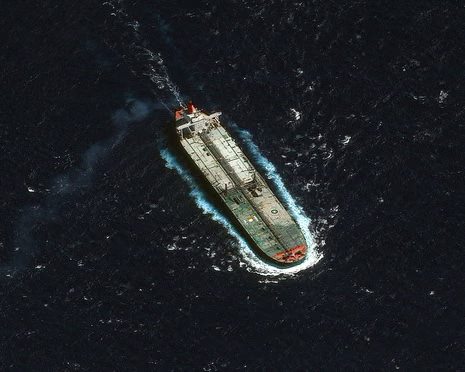
The United States has intercepted a second oil tanker near Venezuela’s coast. This move intensifies an already tense standoff. The vessel, reportedly the Panama-flagged Centuries, was stopped east of Barbados in the Caribbean Sea. The operation took place at dawn and involved the U.S. Coast Guard with support from the Pentagon.
This action follows President Donald Trump’s order for a “total and complete blockade” of sanctioned Venezuelan oil tankers. It is part of a broader strategy to pressure President Nicolás Maduro. A video released by U.S. authorities shows a military helicopter hovering over the tanker. The footage highlights the scale and precision of the operation.
Venezuela Denounces “Piracy”
Caracas slammed the U.S. action as an act of “international piracy.” Vice President Delcy Rodriguez condemned the seizure. She claimed the crew was forcibly removed. She also promised legal action through the United Nations and other international bodies. The Venezuelan government described the operation as theft of private property. It vowed consequences for the U.S.
U.S. Justification
Homeland Security Secretary Kristi Noem defended the interception. She stated that the U.S. aims to prevent sanctioned oil from funding regional narco-terrorism. Analysts note that the seized tanker was reportedly not under U.S. sanctions. This signals a widening pressure campaign on Maduro beyond the original sanctioned targets.
Reports indicate the tanker carried around 1.8 million barrels of Venezuelan crude oil. The oil was disguised under a false name. Its destination was China. This “shadow fleet” of disguised tankers has been a key element in Venezuela’s oil exports. Many shipments have been disrupted by recent U.S. actions.
Impact on Venezuelan Oil Exports
The seizure has caused a sharp drop in Venezuelan crude exports. Many vessels now remain in port. They avoid interception by U.S. forces. This has created an effective embargo. While sanctioned tankers face direct U.S. action, some shipments, including those managed by U.S. companies like Chevron, continue under authorization.
Rising Regional and International Tensions
The U.S. campaign has also included military strikes on alleged drug-trafficking vessels. These occurred across the Caribbean and Pacific. Reports say the strikes resulted in over 100 deaths. Maduro accused the U.S. of pursuing regime change. He claims the goal is to control Venezuela’s vast oil reserves, among the world’s largest.
South American leaders voiced concern over the growing militarization. Brazilian President Luiz Inácio Lula da Silva warned that conflict over Venezuela could trigger a humanitarian crisis. He also said it could set a dangerous international precedent. Argentine President Javier Milei, an ally of Trump, countered that U.S. pressure could help “free the Venezuelan people.” The situation underscores deep divisions in regional responses.
About The Author