The U.S. Navy has confirmed that construction on the first two Trump-class battleships is not expected to begin until the early 2030s, despite the program’s recent public unveiling. While overall costs have yet to be finalized, the service is moving forward with early design work by issuing sole-source contracts to major U.S. shipbuilders and naval architects.
Early Design Work Moves Ahead
According to Navy officials speaking with The War Zone, design and engineering studies are already underway. These efforts are aimed at refining both the technical requirements and projected costs of the massive surface combatants. More detailed budget information is expected to appear in the fiscal year 2027 presidential budget request.
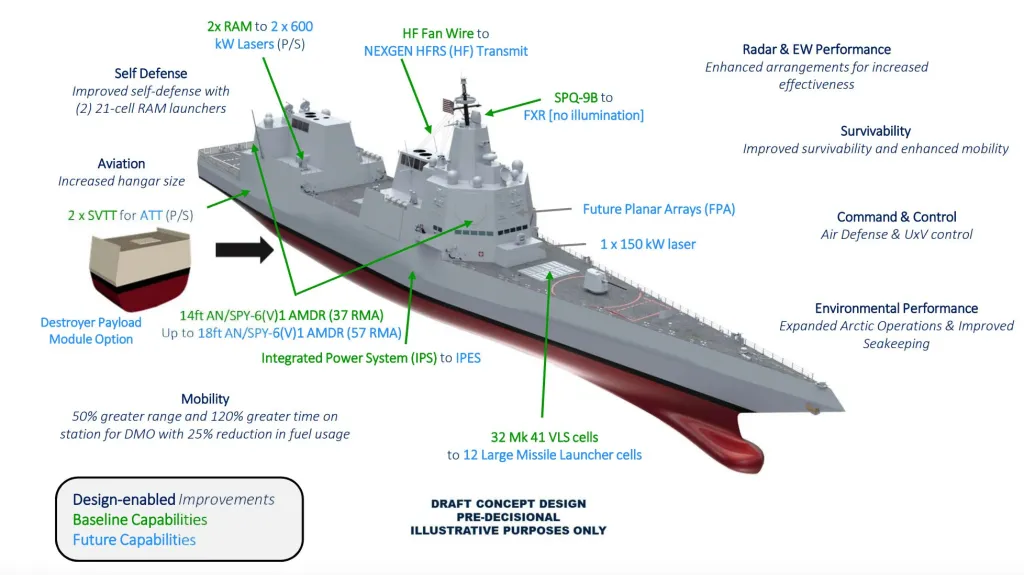
Industry sources familiar with the program said the Trump-class initiative is replacing the Navy’s earlier DDG(X) next-generation destroyer program, with portions of that earlier design work being incorporated into the new battleship concept.
Trump Unveils Ambitious Warship Plan
President Donald Trump formally introduced the Trump-class battleship program during an event at his Mar-a-Lago estate in Florida. The vessels are envisioned as some of the largest and most heavily armed surface warships built by the U.S. Navy in decades.
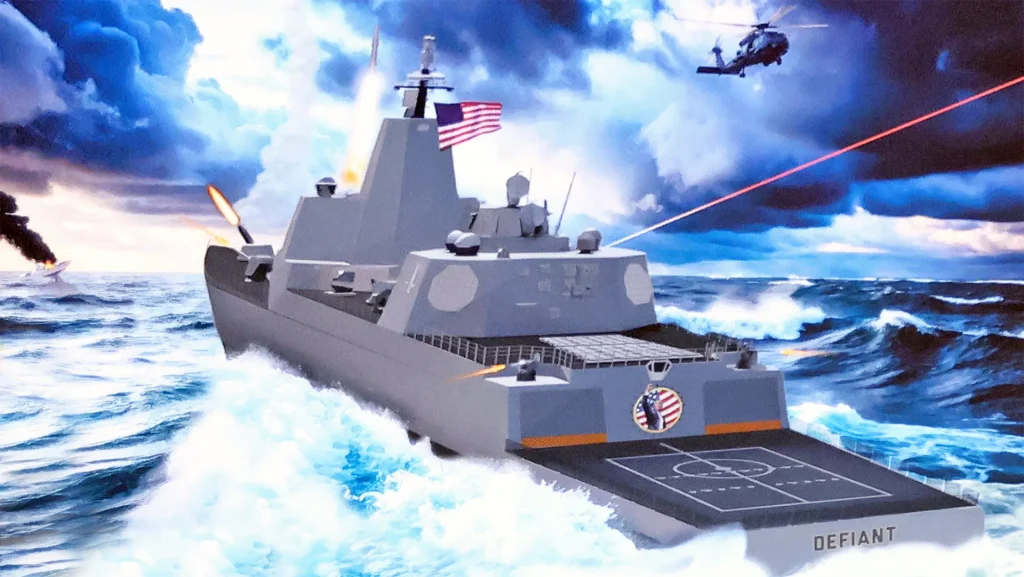
Each ship is expected to displace at least 35,000 tons and carry a mix of advanced weapons, including nuclear-capable and conventional missiles, electromagnetic railguns, laser systems, and traditional naval guns. The Navy plans to begin with two ships, starting with the USS Defiant, as part of an initial group of 10 vessels. Trump has suggested the fleet could later expand to 20 or more ships.
Construction Timeline Remains Unclear
While the president indicated that work on the first ships could begin quickly, Navy officials clarified that actual shipbuilding is still years away. A Navy spokesperson said construction is currently planned for the early 2030s, following a lengthy design and review process.
Naval Sea Systems Command (NAVSEA) has issued contracting notices outlining six-year design efforts involving General Dynamics Bath Iron Works, Huntington Ingalls Industries, and Leidos Gibbs & Cox. If these timelines hold, the design phase alone would extend into 2032—closely matching estimates for when construction could realistically begin.
Shipbuilders Voice Support
Huntington Ingalls Industries and Bath Iron Works both said they are prepared to support the Navy’s goals and emphasized their experience building advanced surface combatants. Company leaders pointed to recent improvements in workforce stability and shipyard capacity, noting that those efforts are expected to continue through the latter half of the decade.
No Launch Date Yet for USS Defiant
Because the program remains in the early design stage, the Navy has not provided a projected launch date for the USS Defiant. Officials noted that, after launch, additional time would be required for final outfitting, sea trials, and commissioning before the ship could enter active service.
Planned Size and Performance
Preliminary specifications released by NAVSEA indicate the Trump-class ships will measure between 840 and 880 feet in length, with a beam of roughly 105 to 115 feet. The vessels are expected to exceed 30 knots in top speed.
By comparison, today’s Arleigh Burke-class destroyers and Ticonderoga-class cruisers displace just over 10,000 tons, making the Trump-class ships significantly larger. The Navy’s last battleships—the Iowa class—were even heavier, displacing more than 57,000 tons during World War II.
Weapons and Combat Systems
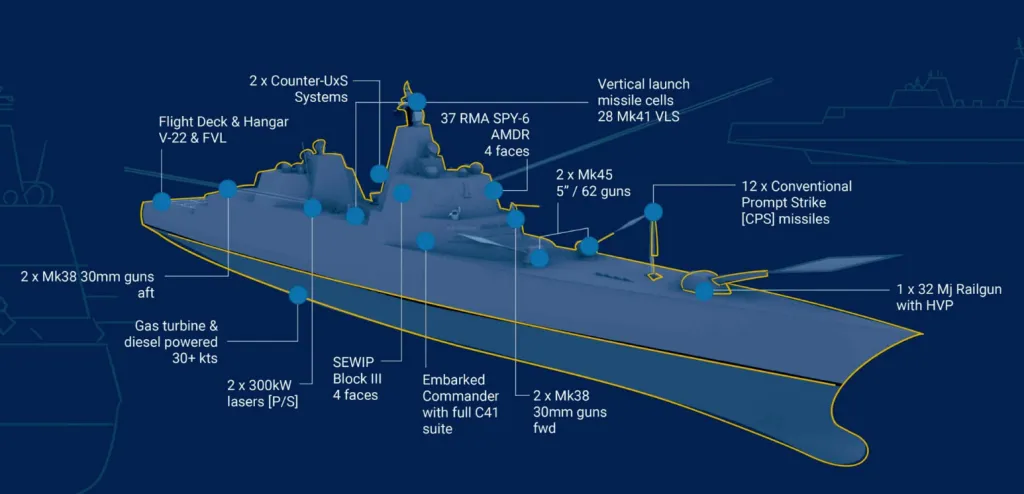
The Trump-class design includes:
- 128 Mk 41 Vertical Launch System (VLS) cells, split between the bow and stern
- Nuclear-capable and conventional cruise missiles, including SLCM-N
- 12 hypersonic missiles housed in a dedicated launcher for Intermediate-Range Conventional Prompt Strike
- A 32-megajoule electromagnetic railgun and two 5-inch naval guns
- Close-in defense systems, including 30mm cannons, Rolling Airframe Missiles, and counter-drone capabilities
Despite the ship’s size, the total number of VLS cells is only modestly higher than those found on existing cruisers.
Aviation Capabilities
The ships will feature a flight deck and hangar capable of supporting a V-22 Osprey tiltrotor aircraft, future vertical-lift platforms, and MH-60 Seahawk helicopters, enhancing their operational flexibility.
About The Author